Checking the Water Heater's Age When Buying a House
A buyer's checklist: photograph the rating plate at the showing, decode the date, compare it with InterNACHI's 6 to 12 year range, and know what to ask the seller and inspector.
Last updated:
To find out how old the water heater in a house is, photograph its rating plate during the showing, read the manufacture date from the label or serial number later, and compare that age with a published range. For a conventional tank heater, InterNACHI, a home inspection association, lists a life expectancy of 6 to 12 years. The age does not make a decision for you. It tells you which questions to ask the seller and the inspector. Do the decoding before the inspection or due-diligence deadline in your contract, because after it you may have little room to negotiate.
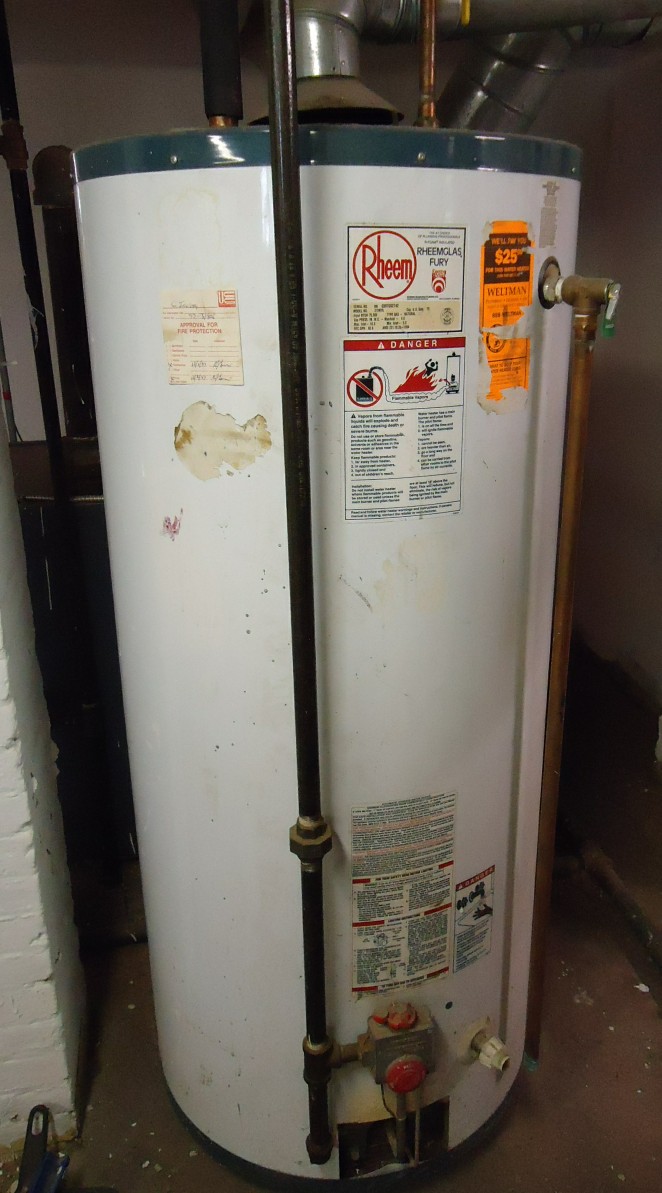

At the showing: photograph the rating plate
You will not have long, and you may not be allowed to move anything, so get the label on camera and do the reading at home.
- Find the heater. It is usually in a basement, garage, closet or utility room. If you cannot find it, ask the agent.
- Locate the rating plate. It is a printed label on the side of the tank, usually in the upper half. The guide to finding the serial number on a water heater shows where it tends to be.
- Take a sharp, close photo of the whole label, then a second one of just the serial number. A phone flashlight helps with glare, and a wide shot of the heater in its space gives you context later.
- Note what else is visible: rust or white mineral crust at the pipe connections, water stains on the floor or tank, a drain pan, and any sticker with a service or installation date.
If the plate is painted over, worn off or blocked, say so to your agent and ask the inspector to look. An unreadable label is an unknown age, not a good or bad one.
At home: decode the date
Look first for a manufacture date printed on the label in plain text. If there is none, decode the serial number: most makers put the manufacture date inside it, and each brand uses its own code. Start with the brand name on the label. If it is Bradford White, use the Bradford White serial number decoder. If it is A.O. Smith, use the A.O. Smith decoder. For other brands, the Appliance Age Finder may be able to decode it. If it cannot, give the model and serial number to the brand's support line, or ask the inspector.
If a decoder gives more than one possible year, do not guess: confirm with the manufacturer's support line using the model and serial number.
Once you have a build year, subtract it from the current year, or try the equipment remaining life calculator.
Manufacture date is not installation date
The serial number tells you when the tank was built, not when it was installed in this house. A heater can sit in stock before it is installed, so treat the decoded age as an upper bound. This is general reasoning, not a sourced rule. For the installation date, check for a service sticker on the heater, look up the permit record at the local building department, or ask the seller.
Compare the age with a cited range
InterNACHI's Standard Estimated Life Expectancy Chart gives a conventional water heater 6 to 12 years. InterNACHI says life expectancy varies with usage, weather, installation, maintenance and quality of materials, and that the chart is only a general guideline, not a guarantee or warranty.
This is one published range, so use it as a rough yardstick. Here is a way to read a decoded age against it:
| Where the age falls | What it suggests |
|---|---|
| Under 6 years | Newer than the typical lifespan. Still confirm there are no leaks and ask who installed it. |
| 6 to 12 years | Inside the listed range. Ask for maintenance records and about leaks, note the age for your records, and the nearer it is to 12, the more you should plan for replacement within your first years of ownership. |
| Over 12 years | Past the typical figure. It may run for years more, but it is reasonable to treat replacement as likely and ask more questions. |
Example: the serial number decodes to 2016. In 2026 that is about 10 years old, inside the 6 to 12 year range and nearer its upper end, so ask for maintenance records and plan for replacement. The step is simple: current year minus the decoded year.
If the heater is old or its age cannot be read, ask the inspector to note it in the report, and ask a plumber to look if anything seems off. If you expect to replace it soon, get a plumber's quote for your area so you know the figure, and raise it or a credit with the seller through your agent.
Water heaters come in other types, and this chart entry is for the conventional storage tank. For tankless, heat pump or solar models, check the manufacturer's own guidance instead of applying this range. The rating plate usually shows which type you have.
Questions for the seller
Many of these are on a standard disclosure form in some places, and in others you simply have to ask. Put them in writing through your agent so the answers are on record.
- Do you know when this water heater was installed, and who installed it?
- Was it replaced as part of a permitted job, and is there a permit or receipt?
- Has it ever leaked, or has the area around it ever been wet?
- Has anyone serviced it, flushed it or replaced parts, and are there records?
- Is there a warranty or service plan that transfers to a new owner?
- Has it ever been repaired, and for what?
Sellers preparing a disclosure can use the same list in reverse: collect the receipt, the permit if there was one, and a photo of the rating plate before listing. A seller who can answer these quickly saves a buyer's time.
Questions for the inspector
- What does the rating plate say about age, and does the unit look original to the house?
- Does the tank show corrosion, moisture or past leak marks, and are the connections dry?
- Is it installed in a way you would expect, with a temperature and pressure relief valve and discharge pipe, a drain pan where needed, and proper venting if it burns gas?
- Does it heat normally, and is there any unusual noise?
- Is anything about it outside the scope of your inspection?
An inspector reports what is visible on the day, so ask what was and was not covered. If something looks off, ask whether a plumber should take a closer look.
What an old but working heater does and does not tell you
A heater past the 6 to 12 year range that heats water normally tells you it has survived so far. It does not tell you it is about to fail, and it does not prove it is fine. The range is a guideline for a whole category, and lifespan varies with water quality, maintenance, installation and usage. InterNACHI notes, for example, that the mineral content of water can shorten the life of water heaters.
What age does imply is a planning question: whether you would be comfortable replacing the heater soon after moving in, and whether the seller can show it has been looked after. It does not imply that the house has a plumbing problem, and it should not be treated as proof of one. A newer heater with a leak history is a bigger flag than an older one with clean records and a dry base.
Because other sources quote different ranges, condition and records carry more weight than the year alone, and the questions above are how you get at them. Age is the starting point, and the rating plate is the best place to get it, so photograph it at the showing.