How Long Does a Furnace Last?
InterNACHI's chart gives furnaces 15 to 25 years. Here is what that range does and does not tell you, how to find your furnace's age, and the signs it is wearing out.
Last updated:
InterNACHI's Standard Estimated Life Expectancy Chart gives furnaces 15 to 25 years. That is the answer to how long a furnace usually lasts, and it is a planning range, not a countdown. A furnace inside it can be fine or failing, and one past it can keep running. What matters most for a decision is your furnace's actual age and condition, so check the age first.
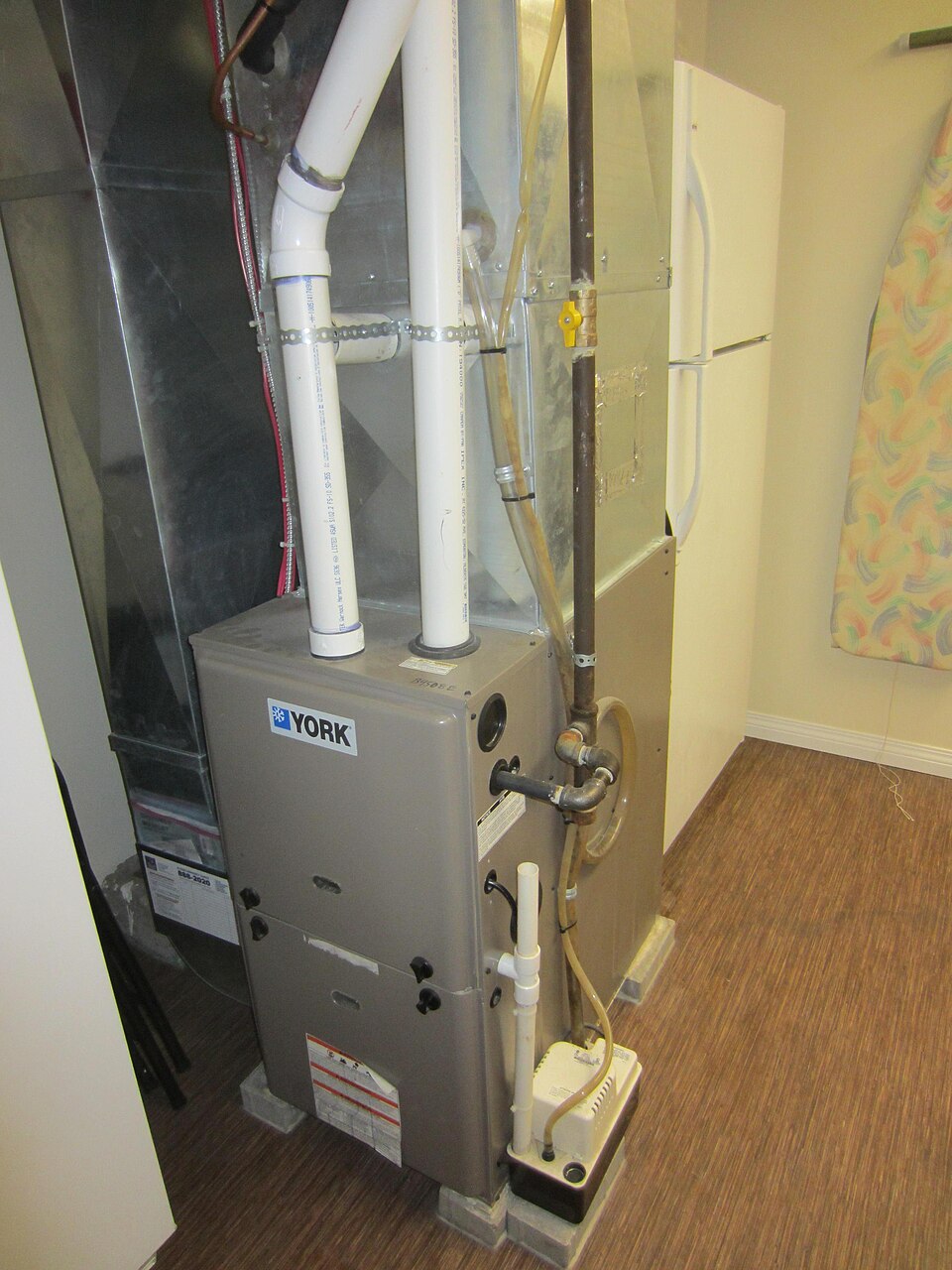

Check your furnace's age first
A lifespan figure only means something against a real age. The build date is usually on the data plate, a label on the cabinet, often just inside the blower door. Look for the serial number and model number there.
The age is usually encoded in the serial number, and each brand does it differently. If the label says Carrier, the Carrier serial number lookup turns the serial into a build year and an age range. For other brands, look for a printed manufacture date on the data plate. If there is none, search the brand name plus "serial number lookup", or ask the manufacturer with the model and serial numbers. The HVAC data plate guide shows how to read the label. Once you have a build year, the equipment remaining life calculator compares it with the furnace range below and shows how much of it has been used.
A furnace's build year can be a year or so before the year it was installed, because it may have sat in a warehouse. Treat the age as approximate.
What the lifespan range says
InterNACHI lists a single entry for furnaces: 15 to 25 years. It is a guideline for a whole category, and InterNACHI itself says it should not be relied on as a guarantee or warranty, so it cannot reflect your climate or installation. The chart's figures assume regular recommended maintenance and ordinary wear, not neglect, abuse or extreme conditions.
A worked example, with made-up numbers: a furnace built in 2005 and checked in 2026 would be 21 years old, which sits inside the 15 to 25 range with roughly 0 to 4 years left by InterNACHI's figures. That tells you to start planning, not that it is about to fail.
How long a gas furnace lasts
InterNACHI's chart does not split furnaces by fuel. For non-weatherized gas furnaces (the typical indoor unit) and mobile home gas furnaces, the U.S. Department of Energy's 2023 final rule on consumer furnace efficiency standards models an average lifetime of 21.5 years. That is a modeled average, not a measured lifespan or a guarantee. For oil, electric or rooftop (weatherized) furnaces this page has no separate sourced figure, so use InterNACHI's 15 to 25 years and ask a technician about your model.
Signs a furnace is near the end
None of these proves a furnace is finished, and none are from InterNACHI's chart. They are common reasons a technician might raise replacement, and they matter more together than alone.
- Repairs are getting more frequent. A first repair is normal. A string of them in a short time suggests the whole system is wearing out.
- Heating bills creep up without a change in how you use the house, or some rooms stay cold while the furnace runs.
- It cycles on and off often, takes longer to heat the house, or is noticeably louder, with banging, rattling or squealing.
- Visible rust, soot or water around the unit or its vent pipes.
- It is old and its parts are hard to find. Ask the technician whether parts are still available for your model.
Safety signs are a different category. If a carbon monoxide detector goes off, or you smell gas, leave the house and call your gas utility or emergency services. A cracked heat exchanger is a safety problem a qualified technician has to diagnose. Do not judge it yourself.
What shortens a furnace's life
InterNACHI's chart notes that lifespan varies with usage, weather, installation, maintenance and quality of materials. In practice that points to a few things you can influence:
- Skipped maintenance. A dirty filter or a neglected burner section makes the furnace work harder.
- Poor airflow. Blocked vents and undersized or leaky ducts can overheat the unit.
- Installation quality. A badly sized or badly vented furnace may wear faster than a well-installed one.
- Heavy use in a harsh climate, since a furnace that runs much of the winter accumulates wear faster.
- Moisture and corrosion from leaks, condensate problems or a damp room.
Repair or replace: age is not condition
The range describes a group of furnaces, not yours. A well-maintained furnace can outlast the top of the range, and a poorly installed one can fall short of the bottom. A technician's inspection of the heat exchanger, burners, venting and controls says more about remaining life than the build year does. Use age to decide when to start asking questions, and condition to decide what to do.
Facing a repair quote, first find the build year and compare it with the range using the calculator. Then:
- Get a written quote that names the failed part. A cheap, isolated part on an otherwise sound furnace is usually reasonable to repair.
- If the furnace is in the last third of its range and the failed part is a major component (heat exchanger, control board, blower motor), ask for a replacement quote alongside the repair quote and compare them.
- Get a second opinion before a big expense, especially one prompted by a cold snap.
Rule-of-thumb formulas that compare repair cost with replacement cost are informal, so use them only as a rough check.
To find the age of other equipment, start from the appliance age finder.